At it’s October 31, 2012 meeting, the Executive Committee of the CPWV adopted the following platform position:
We support the responsible and humane use of animals for food, clothing, medical research, companionship, assistance, recreation, entertainment, and education. It is our belief that people who keep, utilize and care for animals have a duty to assure their well-being; providing appropriate housing, nutrition, medical care, humane treatment and handling, and when necessary, humane euthanasia.
The ethical and regulated hunting, trapping, and fishing of abundant species are vital components of wildlife management programs which help sustain and perpetuate healthy populations and natural habitats. While we support the enforcement of state and local laws which maintain ecological conservation, prohibit mistreatment, and provide penalties for animal abuse, we only recognize the authority of similar federal laws on legitimate federal lands. We support laws that punish animal abusers for their misdeeds, and reject legislation that seeks to penalize everyone, responsible animal owners and industries alike, for the misconduct of the few.
We reject the anti-human philosophy of the so-called “animal rights” movement which often places the interests of animals ahead of people, even when human lives are at stake. Furthermore, we reject legal standing for animals, believing that the welfare of animals is best protected by retaining current laws which recognize animals as property. We are committed to preserving the human-animal bond, the special bond that exists when people live and work with animals and believe that campaigns to limit and ultimately abolish this interaction are unnatural, misguided and harmful to both people and animals. The sensational use of media campaigns to promote radical animal policies undermines the democratic process by promoting a misinformed electorate.
Happy Constitution Day!
 On this day in 1787 in Philadelphia, the Constitution for the united States of America was signed by delegates from twelve states (Rhode Island and Providence Plantations did not send any delegates). Written on four pages plus the transmittal page (finally on display at the National Archives), it is concise, straightforward, and easy to read by the common man. Read it today. Read it any day. Get a pocket Constitution and Declaration of Independence to keep it handy. Also get a copy of the Federalist Letters which is a compilation of newspaper articles written in defense of our Constitution (by founders John Jay, Alexander Hamilton, and James Madison), as well as the Anti Federalist Letters which challenged it. Many in-depth study courses are available for those interested in exploring the nuances of this founding document. We suggest that you explore this as a family or group project with like-minded friends and neighbors. Make every day Constitution Day!
Convention Event on Facebook
Join us on Facebook at our event page created for our convention.
https://www.facebook.com/events/333873393370968
State Convention – SEPT 22
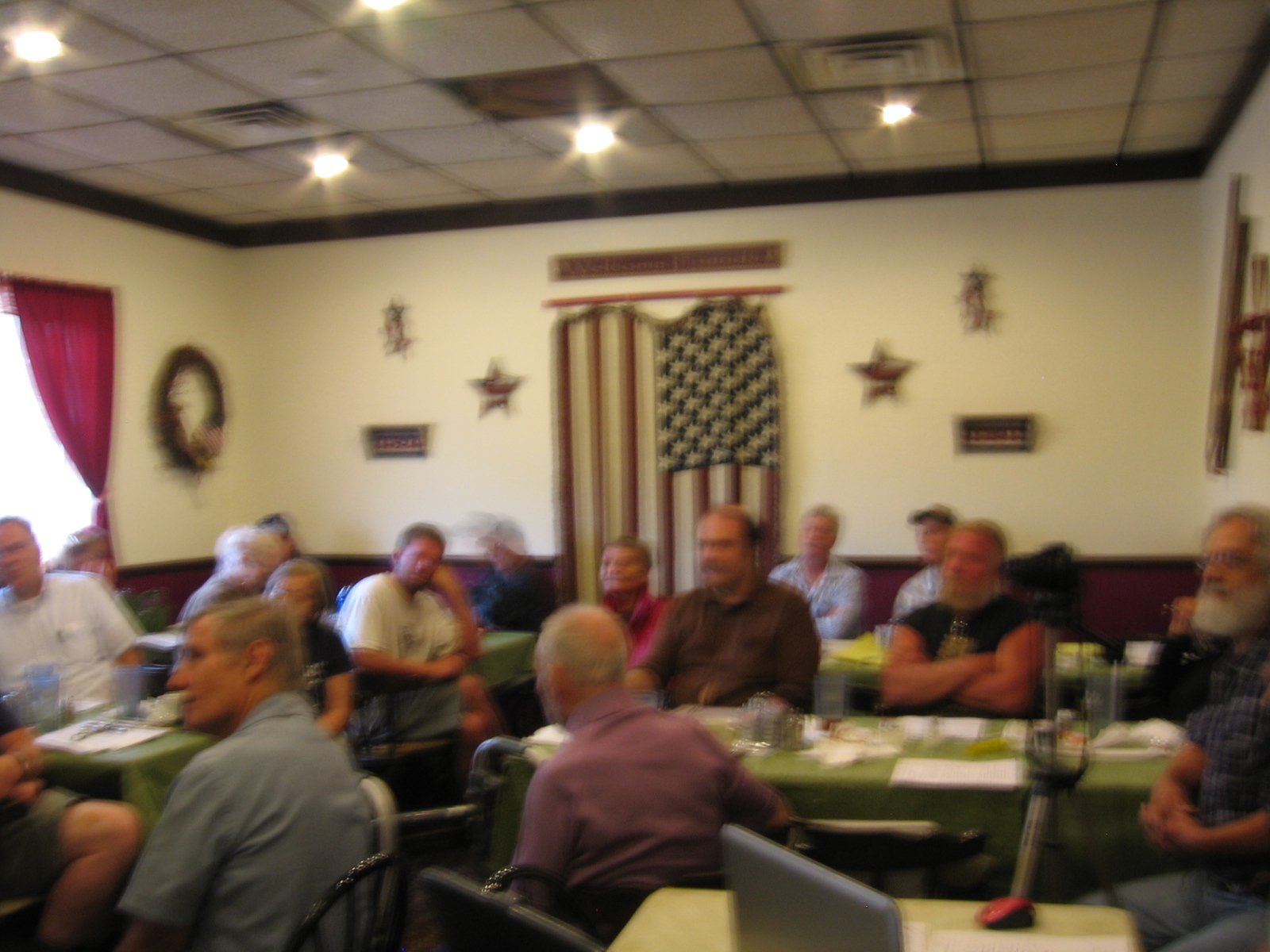 We had a PACKED House yesterday at our state meeting in Burnsville. Twenty-two patriots attended to hear eight different speakers. The date of our State Convention was set for Saturday, September 22, 2012. The location of this meeting will be the Barboursville Community Park in Cabell County. Email us for full details at info@cpwv.org.
July 21 Meeting – 79er Diner
 The State Central Committee is pleased to announce our next State Party meeting – OPEN TO EVERYONE. The meeting will be held Saturday, July 21 at the 79er Diner in Burnsville, WV (Braxton County). This is very easy to get to because it is right at Exit 79 off of Interstate 79 (centrally located 79 miles north of Charleston). TIME: Noon to 5:00pm.
Read More
Happy West Virginia Day
 The United States Constitution says a new state must gain approval from the original state, which never occurred in the case of West Virginia. Since the Restored Government was considered the legal government of Virginia, it granted permission to itself on May 13, 1862, to form the state of West Virginia.
When Congress addressed the West Virginia statehood bill, Massachusetts Senator Charles Sumner demanded an emancipation clause to prevent the creation of another slave state. Restored Government Senator Carlile wanted a statewide election to decide the issue. Finally, a compromise between Senator Willey and Committee on Territories Chairman Benjamin Wade of Ohio, determined that, after July 4, 1863, all slaves in West Virginia over twenty-one years of age would be freed. Likewise, younger slaves would receive their freedom upon reaching the age of twenty-one. The Willey Amendment prohibited some slavery but it permitted the ownership of slaves under the age of twenty-one.
The United States Senate rejected a statehood bill proposed by Carlile which did not contain the Willey Amendment and then, on July 14, 1862, approved a statehood proposal which included the Willey Amendment. Carlile’s vote against the latter bill made him a traitor in the eyes of many West Virginians and he was never again elected to political office. On December 10, 1862, the House of Representatives passed the act. On December 31, President Lincoln signed the bill into law, approving the creation of West Virginia as a state loyal to the Union without abolishing slavery. The next step was to put the statehood issue to a vote by West Virginia’s citizens. Lincoln may have had his own reasons for creating the new state, knowing he could count on West Virginia’s support in the 1864 presidential election. On March 26, 1863, the citizens of the fifty counties approved the statehood bill, including the Willey Amendment, and on June 20, the state of West Virginia was officially created.
In May 1863, the Constitutional Union party nominated Arthur I. Boreman to run for governor. Boreman ran unopposed, winning the election to become the first governor of West Virginia. The Restored Government of Virginia, with Pierpont continuing as governor, moved to Alexandria, Virginia and eventually to Richmond following the war. Pierpont ordered an election to allow the residents of Jefferson and Berkeley counties to determine whether their counties should be located in West Virginia or Virginia. Union troops were stationed outside polling places to intimidate those who might vote for Virginia. Despite local support for Virginia, residents who actually filled out ballots voted overwhelmingly to place both counties in West Virginia. In 1865, Pierpont’s government challenged the legality of West Virginia statehood. In 1871, the United States Supreme Court awarded the counties of Jefferson and Berkeley to West Virginia.
The new state of West Virginia had sectional divisions of its own. While there was widespread support for statehood, public demands for the separation from Virginia came primarily from cities, namely Wheeling and Parkersburg. As a growing industrial region with improved transportation, northwestern Virginia businesses desired a more independent role in government. With the extension of the Baltimore and Ohio Railroad to Wheeling in 1853 and Parkersburg in 1857, the northwest depended much less on Richmond and eastern Virginia markets.
Mothers’ Day Founded in West Virginia
 Anna Jarvis, daughter of Anna Reeves Jarvis, who had moved from Grafton, West Virginia, to Philadelphia, in 1890, was the power behind the official establishment of Mother’s Day. Anna swore at her mother’s gravesite in 1905 to dedicate her life to her mother’s project, and establish a Mother’s Day to honor all mothers, living and dead.
Read More
Nashville Convention Wrap Up
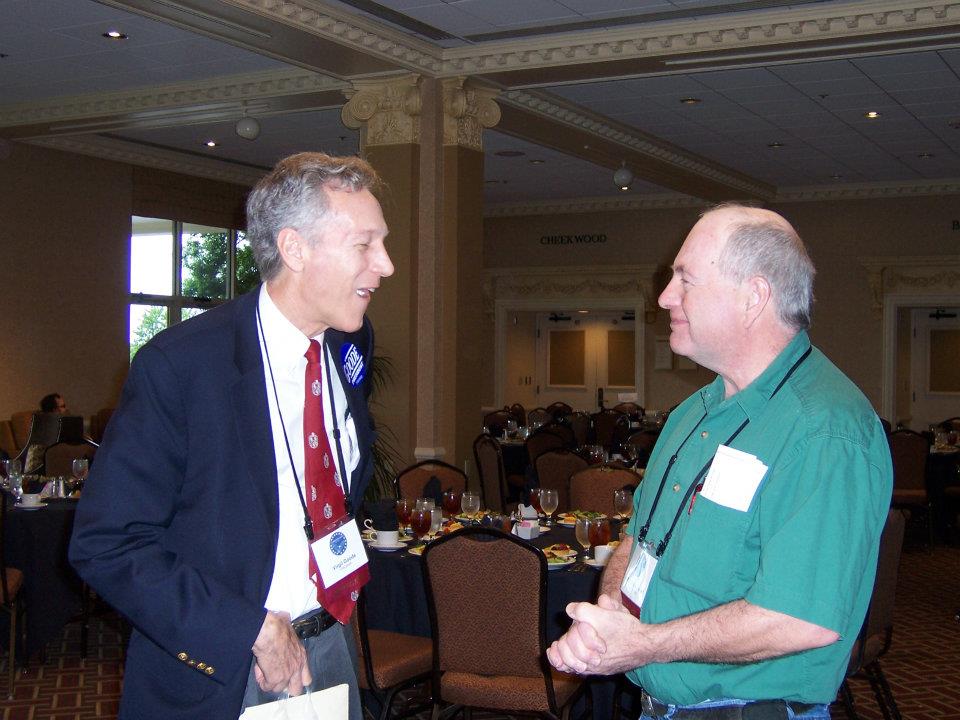 Former Virginia Congressman, Virgil Goode has been nominated as the Constitution Party’s presidential candidate for 2012. At the national party convention in Nashville, Tennessee on Saturday, Mr. Goode garnered 203 nomination votes. Darrell Castle (TN), the CP’s 2008 vice presidential nominee, received 120 votes, Robby Wells (SC) 58, Susan Ducey (KS) 15, and Laurie Roth (WA) 6.
Read More
Resolution on CP Presidential Candidates
At its April 5, 2012 conference call meeting duly assembled, the CPWV Executive Committee adopted the following resolution regarding endorsement of presidential candidates by our delegates to the national party nominating convention in Nashville, Tennessee.
Whereas, individuals have approached the Constitution Party and the Constitution Party of West Virginia to seek nomination for political office who have not before been affiliated with the Party,
Whereas, we seek candidates who are committed to the Party’s platform,
And, whereas we are interested in attracting candidates who are committed to the long term growth of the Party,
Resolved, therefore, that we the members of the Constitution Party of West Virginia direct our delegates to the National Convention to support only candidates for President who pledge their unqualified endorsement of the Seven Principles of the Party platform, Read More
Nashville Delegation Fund-Raiser
We are SIXTY ONE PERCENT (61%) towards our goal! ~$920 raised so far. B.Q. sent $99. A.J. pledged $25. J.R. pledged $25. J.B. pledged $30. D.S. pledged $100. J.J. pledged $100. C.S. Chipped-In $25. N.R. pledged $100. K.L. pledged $50. J.W. sent $100. G.S. sent $50. B.D. sent $50 and has pledged to send another $50. R.M. sent $10. R.C. sent $40. P.H. sent $25. J.H. pledged $25. M.F. pledged $25. S.B. sent $10. A.M. pledged $20. G.W. pledged $10. K.H. M.R., K.N., R.K., T.W., B.L., M.S., D.Q. and A.B. also sending checks. Thank you all! Remember that we made a commitment to reimburse our delegation for their travel expenses (over $700) to Nashville. Please help us raise the remaining 39%.
Since PayPal takes almost 6%, we would prefer it if you would please send us a personal check instead (made out to “CPWV”) to:
Constitution Party of West Virginia
PO Box 458
Daniels, WV 25832
The Constitution Party of West Virginia has six (6) delegation votes for our presidential candidates this year. So far, there are eight (8) declared candidates for our national party’s presidential nomination. Read More