 Written by George Mason (1725-1792), who Thomas Jefferson regarded as the “the wisest man of his generation,” the Virginia Declaration of Rights was adopted by the Virginia Constitutional Convention on June 12, 1776. Widely copied by the other colonies (by the end of 1776 five colonies had adopted declarations of rights; by 1783 every state had some form of a bill of rights), it became the basis of the Bill of Rights to the U.S. Constitution after Mason fought against ratification of the Constitution because it contained no bill of rights. The Declaration of Rights was also used by Thomas Jefferson for the opening paragraphs of the Declaration of Independence. The Marquis de Condorcet called the Virginia Declaration of Rights “the first Bill of Rights to merit the name.”
Committee to Draft the Declaration of Independence Formed
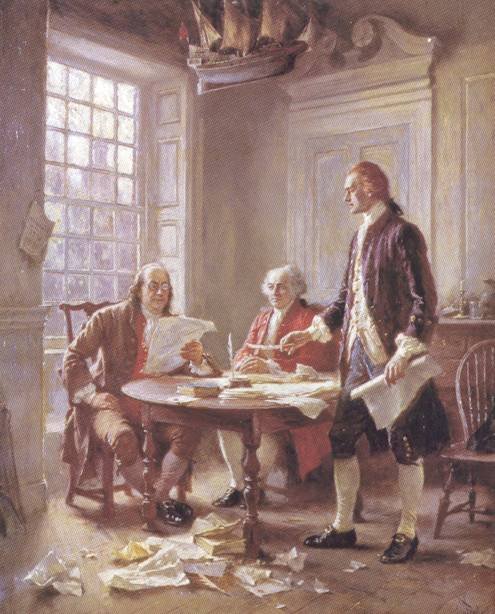 Five men were named to a committee on June 11, 1776 to draft a document explaining the grievances against Great Britain. This document would become the Declaration of Independence. The committee members were Thomas Jefferson, Benjamin Franklin, John Adams, Roger Sherman, and Robert Livingston. However, Jefferson took on the task of actually writing the document. Franklin and the committee helped with revisions and then the entire Continental Congress went through and debated the document to refine it to the final copy that was officially adopted on July 4, 1776.
For an entertaining dramatization of this historic event, check out the musical, 1776. Here’s a clip: But Mr. Adams
Parties object to being abbreviated on Oregon ballot
 Oregon’s eight recognized political parties are about to get downsized on the ballot this year – and they are not happy about it. The Oregon secretary of state’s office, saying that a new fusion-voting law is putting a squeeze in space on the ballot, plans to have each party listed next to a candidate’s name by a three-letter abbreviation. Read More
California Voters Pass Top-Two, Restrict Choice
 Proposition 14, the top-two ballot measure, has been passed in California with 53.8% “Yes”. This changes their primary election into an open general and thus makes the general election effectively a run-off between the top two primary candidates, regardless of their party. Third party candidates will be completely shut out by Republicans and Democrats and write-in votes will no longer be counted. Read More
Madison Proposes Amendments
 On June 8, 1789, James Madison introduced his proposed amendments to the Constitution, which would eventually become known as the Bill of Rights. On September 25, 1789, the First Federal Congress of the United States proposed to the state legislatures twelve amendments to the Constitution.
The first two, concerning the number of constituents for each Representative and the compensation of Congressmen, were not ratified. The original second amendment proposed by the First Federal Congress dealt with the compensation of members of Congress. Although rejected at the time, it was eventually ratified on May 7, 1992, as the 27th amendment.
Articles three through twelve, known as the Bill of Rights, became the first ten amendments to the U.S. Constitution and contained guarantees of essential rights and liberties omitted in the crafting of the original document.
Raising of the Hampshire Regiment
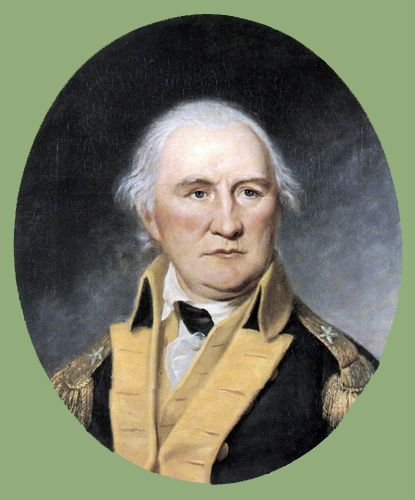 On June 7, 1781, General Daniel Morgan wrote to General William Darke from Winchester, Virginia and authorized him to raise a regiment in the counties of Berkeley and Hampshire. General Darke hastened to execute the order, and the organization of the troops was speedily completed and they were put in the field. This was the famous Hampshire Regiment, which witnessed the surrender of Cornwallis to the united armies of America and France at Yorktown on October 19, 1781.
The town of Darkesville in Berkeley County is named for him. 
Remembering D-Day
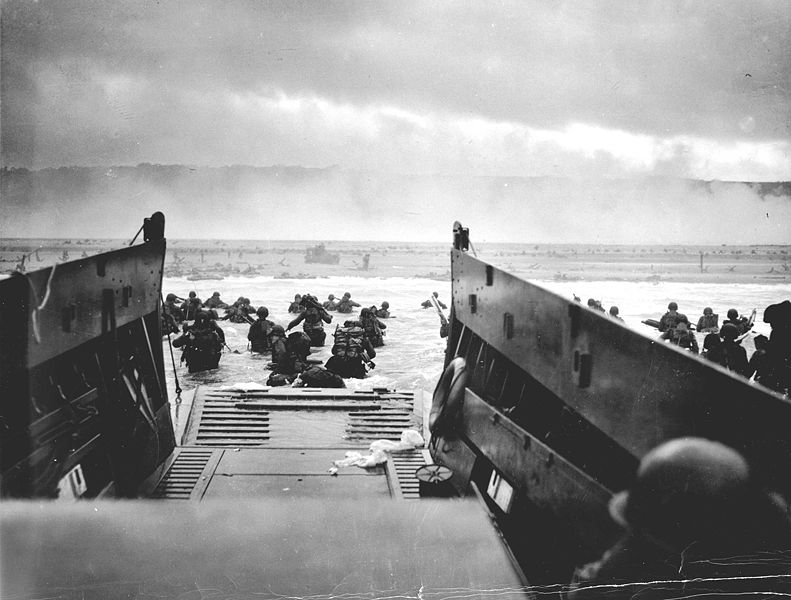 The Normandy landings were the landing operations of the Allied invasion of Normandy, also known as Operation Neptune and Operation Overlord, during World War II. The landings commenced on Tuesday, 6 June 1944 (D-Day), beginning at 6:30 AM British Double Summer Time (UTC+2). In planning, D-Day was the term used for the day of actual landing, which was dependent on final approval.
The assault was conducted in two phases: an air assault landing of 24,000 American, British, Canadian and Free French airborne troops shortly after midnight, and an amphibious landing of Allied infantry and armoured divisions on the coast of France commencing at 6:30 AM. There were also subsidiary ‘attacks’ mounted under the codenames Operation Glimmer and Operation Taxable to distract the German forces from the real landing areas.
The operation was the largest amphibious invasion of all time, with over 160,000 troops landing on 6 June 1944. 195,700[6] Allied naval and merchant navy personnel in over 5,000[5] ships were involved. The invasion required the transport of soldiers and material from the United Kingdom by troop-laden aircraft and ships, the assault landings, air support, naval interdiction of the English Channel and naval fire-support. The landings took place along a 50-mile (80 km) stretch of the Normandy coast divided into five sectors: Utah, Omaha, Gold, Juno and Sword.
Battle Born
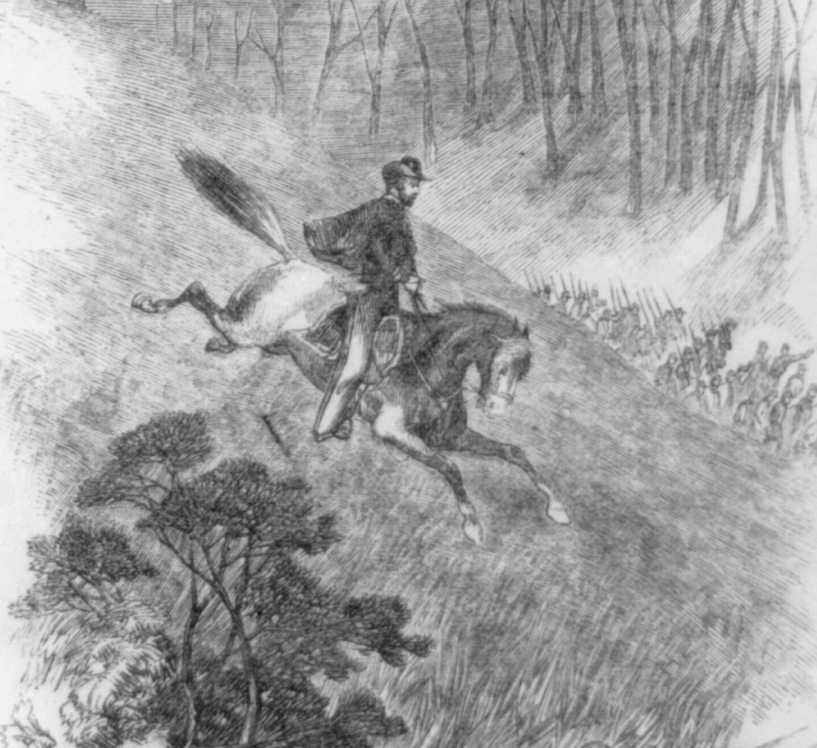 The Battle of Philippi — also known mockingly as “The Philippi Races” — was fought on June 3, 1861, in and around Philippi, Virginia (now Barbour County, West Virginia) as part of the Western Virginia Campaign of the so-called Civil War. It was the first organized land action in the war, but is often treated dismissively as a skirmish rather than a significant battle. Estimated casualties were 4 US, and 26 CSA.
Col. Thomas A. Morris, temporarily in command of Union forces in western Virginia, mounted a two-prong advance under E. Dumont and B.F. Kelley against a small Confederate occupation force at Philippi under Porterfield. Kelley marched on back roads from near Grafton on June 2 to reach the rear of the town, while Dumont moved south from Webster. Both columns arrived at Philippi before dawn on the 3rd. The resulting surprise attack routed the Confederate troops, forcing them to retreat to Huttonsville. Although a small affair, this was considered the first major land action in the Eastern Theater.
Phil Hudok of Huttonsville is the Constitution Party’s candidate for U.S. Congress this year. His website is http://hudok.com
Tea Parties Need Teeth
By Dr. Edwin Vieira, Jr., Ph.D., J.D.
NewsWithViews.com
[The following is the full text of an address presented to the National Heritage Center for Constitutional Studies at its 2009 Constitution Day conference.]
Read More
NewsWithViews.com
[The following is the full text of an address presented to the National Heritage Center for Constitutional Studies at its 2009 Constitution Day conference.]
Read More
Sanctity of Life Platform Position Revised
By unanimous approval of its voting membership, at meeting duly assembled in Morgantown, Monongalia County on April 24, 2010, the CPWV has revised for style the following platform position on the Sanctity of Life. This position was originally adopted at the Executive meeting of September 23, 2006.
We affirm the God-given sanctity of all human beings, born or un-born, without exception, and with full and equal unalienable rights regardless of their station in life. To that end, the Constitutions of the United States and West Virginia were ordained and established for “ourselves and our posterity.” Abortion is a detestable and heinous act against the most innocent of society; no civil government may legalize the taking of the right to life without justification. In those cases where the life of the mother is at risk, every effort should be made by competent medical professionals to preserve the life of both the mother and the child. As to matters of rape and incest, it is unconscionable to take the life of an innocent child for the real or accused crimes of his or her father.
We implore the West Virginia State Legislature to exercise the Doctrine of Interposition, as has recently South Dakota’s, to assert the illegitimate usurpation of authority by the Supreme Court in Roe vs. Wade, etc., and declare this poorly decided case for what it is—binding only on the specific parties involved. We seek immediate legislation to criminalize partial birth abortions and enact parental notification and informed consent laws.
Furthermore, we oppose the promotion and use of all abortifacients and defend the employment rights of those who refuse to participate in their distribution. We oppose all elements of bio-research involving human embryonic or pre-embryonic cells as well as all government “legalization” of euthanasia and suicide. We similarly oppose all forms of involuntary human experimentation whether they be on military personnel, prisoners, children or adults via undisclosed vaccine contents, municipal water treatment, aerosol sprays, electromagnetic, radiation, or other diabolical technologies. Whereas our Creator commands us to be fruitful and multiply, all forms of eugenics, selective breeding, cloning, and coercive population control are abominable evils which are contradictory to America’s Christian heritage.